I’m infatuated with these magnetic digital Polaroids from a small company called VidaBay. They look like instant photos, but use NFC tech and color E Ink screens so you can change the image as often as you want without ever having to charge a battery.
Insta360 just announced the Snap, a new smartphone accessory designed to improve the quality of your selfies. It works like a digital mirror magnetically attached to the back of your Android or iOS smartphone so you can preview and properly frame shots using its more capable rear cameras, while touchscreen functionality lets you control camera apps without having to constantly flip your phone around.
“Specs are launching at an important time, as artificial intelligence transforms the way that we use our computers,” Snap says. “Instead of an operating system that expects us to do all of the work, Specs feature a first-of-its-kind Intelligence System that uses its understanding of you and your world to help get things done on your behalf while protecting and respecting your privacy.”
Last September, Snap revealed its fifth-generation Spectacles, upgraded AR glasses with a twist: they were only ever released to developers. One year later, we still haven’t seen even a glimpse of the consumer-ready version of those glasses, which the company still says is coming in 2026, but Snap is ready to show off Snap OS 2.0, a software update to those developer Spectacles that signals its plans for mainstream AR.
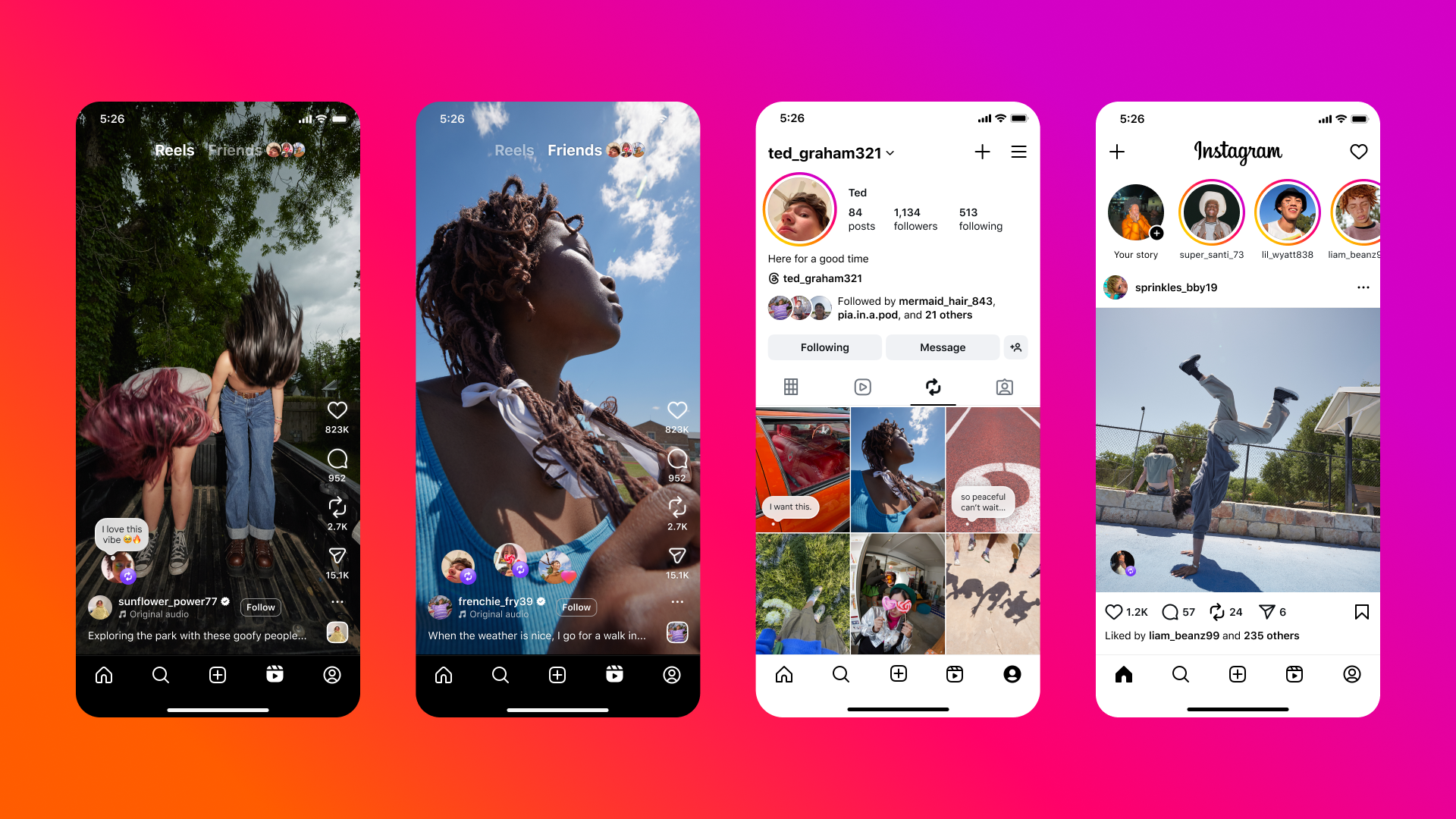
Meta’s latest Instagram features let you repost your friends’ videos and track their real-time locations. Which is great — if you missed out on Snapchat in 2017 and TikTok in 2022.
School districts across 19 states claim that the companies do not adequately implement features like age verification, parental controls, and session timeouts. Design choices that allow for endless scrolling, coupled with targeted algorithms, mean kids have trouble putting down their phones, creating a doom loop that can interrupt sleep at best and create serious mental health issues at worst. The schools say they've had to dedicate resources to handle this, from confiscating phones to dealing with online behavior that spills into classrooms, including dangerous social media "challenges."
Snapchat is now jumping on the AI selfie bandwagon with a new feature called Dreams. The first pack of Dreams is free to make and each additional one costs $1 as an in-app purchase. Snapchat users in Australia and New Zealand are getting access to Dreams starting today, followed by access opening up to the rest of the world over the coming weeks.